

Table of Contents
- Why Buy Interactive Detective Box Sets in 2026
- Killer Mystery Lineup Compared: Subscription vs Box Sets vs Single Story
- How Long Do Mystery Box Games Take to Play?
- Solo Mystery Games for True Crime Fans
- Tips for Hosting a Murder Mystery Game Night
- Cold Case vs Party Style: Which Format Fits Your Group?
- What to Check Before You Buy Interactive Detective Box Sets
- Conclusion
- Frequently Asked Questions
Last Updated: September 25, 2026
Why Buy Interactive Detective Box Sets in 2026
Interactive detective box sets turn a living room into a crime scene you can actually investigate. Instead of watching a mystery unfold on a screen, you sort through physical clues, read police reports, interview suspects, and build a case with your own hands. That shift from passive viewing to active detective work is why so many true crime fans are buying these games in 2026.

Killer Mystery Lineup Compared: Subscription vs Box Sets vs Single Story
The right format depends on how your group plays. A subscription suits players who want a slow burn, box sets suit binge solvers, and single-story games suit a one-night event.
Here is how our three formats stack up:
| Format | Price | Format | Best For |
|---|---|---|---|
| Subscription Box | $29.00/month or $129.00 season pass | 5 monthly episodes | Groups who want a monthly ritual |
| Complete Box Sets (Seasons 1-5) | $129.99 | 5 episodes in one shipment | Binge solvers and gift givers |
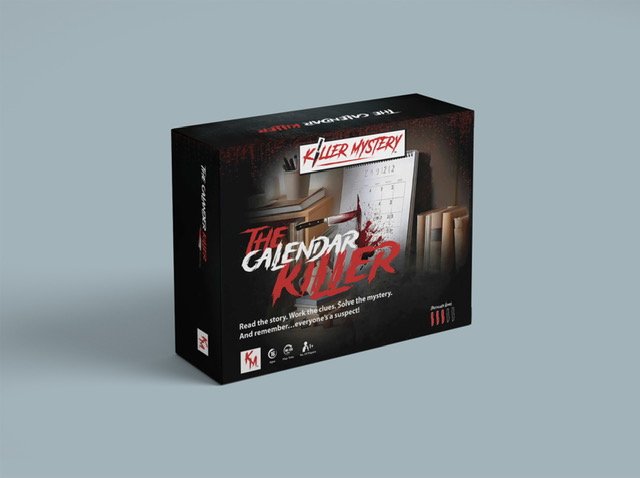
| The Calendar Killer | $39.99 | Single standalone story | One-night play and first-timers |
Pricing and What's Inside Each Option
Every option ships the same core detective kit: a welcome booklet, story cards, research cards, physical clues, and puzzles. The difference is pacing and commitment.

How Long Do Mystery Box Games Take to Play?
A single episode typically runs 60 to 90 minutes, and a full five-episode season runs about five to seven hours spread across multiple sessions. The pacing is built in, so you never feel rushed or stuck waiting.
Solo Mystery Games for True Crime Fans
Solo play is fully supported, and it changes the experience in a good way. Without a group to bounce ideas off, you read every clue more carefully and second-guess your own theories. True crime fans tend to love this.
Here is how solo play works in practice:
- You work through research cards at your own pace
- You examine physical clues without time pressure
- You track suspects and motives in your own notes
- You can pause mid-episode and pick it back up later
Tips for Hosting a Murder Mystery Game Night
A strong game night comes down to setup, not luck. Give your group a clean table, good lighting, and enough room to spread out evidence. Then let the mystery do the work.
Set Up the Room Like an Investigation Desk
Before anyone arrives, clear a table large enough to lay out every card, envelope, and physical clue at once. Add a dedicated "evidence zone" for solved clues and a separate "suspect board" where you pin names, motives, and alibis. Good overhead lighting matters more than mood lighting, dim, warm lamps make small print on research cards hard to read.
Assign Roles Before the First Envelope
A few habits separate a great night from a forgettable one:
- Assign one person to read the welcome booklet aloud so everyone starts on the same page
- Rotate who reads each research card so no single player dominates the clues
- Keep a shared notebook for suspects, motives, and alibis
- Set a soft time limit per episode so the night does not drag
- Save the reveal for the end, no spoilers mid-game
- Serve simple snacks and drinks so nobody leaves the table
Make the Game Accessible to Every Player
If your group includes someone with low vision, ADHD, or a hearing difference, a few adjustments keep everyone in the case:
- Low vision: Provide a magnifying glass and a high-contrast reading lamp. Read research cards aloud rather than passing them around.
- ADHD or attention differences: Break each episode into two 30-minute halves with a five-minute break. The built-in episode structure already supports this.
- Hearing differences: If you use background music or ambient sound, keep it low or off. All clues in a physical detective kit are text-based, so nothing depends on audio.
- Cognitive load: Let one player act as the note-taker so others can focus on discussion. Swap the role each episode.
Plan the Session Length Around Your Group
A single episode typically runs 60 to 90 minutes. For a weeknight, play one episode and stop. For a weekend binge, plan two episodes with a meal break between them. Groups that try to cram all five episodes into one sitting usually hit a wall around episode three, when the suspect list gets messy and fatigue sets in.
Store Everything Between Sessions
Physical kits come with cards, booklets, and clue envelopes, so keep a box or folder handy to hold everything between sessions. Label each episode's materials with a binder clip or envelope so you can pause and resume without sorting through a pile.
Murder Mystery Game - Subscription Box →
Cold Case vs Party Style: Which Format Fits Your Group?
Cold case and party style games ask for different things. Cold case games reward patience, note-taking, and evidence analysis. Party style games reward energy, roleplay, and performance. Pick the wrong one and your group will feel it by the second episode.
What Each Format Actually Asks of Players
| Dimension | Cold Case / Investigative | Party Style / Roleplay |
|---|---|---|
| Player role | Detective analyzing evidence | Character with secrets and motives |
| Core activity | Reading reports, cross-referencing clues, building a timeline | Improvising dialogue, accusing others, revealing secrets |
| Group size | Works solo or with 2-6 | Usually needs 6-12 to function |
| Prep time | Low, open the box and start | High, costumes, character sheets, assigned roles |
| Session length | 60-90 minutes per episode, multi-session seasons | One 2-4 hour event |
| Replay value | Low once solved | Moderate, different players change the outcome |
| Best for | True crime fans, solo solvers, small groups | Dinner parties, friend groups, performers |
How to Tell Which One You Are Buying
Before you buy, scan the product description for these signals:
- Cold case signals: "research cards," "evidence," "suspect list," "episodes," "solve at your own pace," "solo play supported."
- Party style signals: "character booklet," "host guide," "costume suggestions," "assigned roles," "scripted reveals," "minimum 6 players."
Why Our Games Lean Cold Case
Our games lean toward the investigative cold case style, which is exactly why true crime fans tend to stick with them. You receive a welcome booklet, story cards, research cards, physical clues, and logic puzzles, not a character to perform. The payoff is a logical deduction you build yourself, not a scripted reveal someone else delivers.
What If Your Group Is Split?
If half your group wants to perform and half wants to analyze, start with a single story game like The Calendar Killer. It is short enough to test the waters and detailed enough to show whether your crew enjoys real detective work. If the group finishes it and wants more, move to a full season. If they bounce off it, you have learned that cheaply rather than after committing to a five-episode subscription.

What to Check Before You Buy Interactive Detective Box Sets
Run through this checklist:
- How many people will play, and will anyone play solo?
- Do you want a monthly reveal or a full season in one shipment?
- How much table space do you have for evidence and clue cards?
- Does your group prefer logic puzzles or roleplay?
- Is this a gift, a date night, or a recurring game night?
- Do you want a subscription you can cancel anytime, or a one-time purchase?
One more thing worth checking: storage. Physical kits come with cards, booklets, and clue envelopes, so keep a box or folder handy to hold everything between sessions. It keeps the case organized and makes it easy to pause and resume.
Conclusion
The hard part of buying a detective box set is not finding one. It is choosing the format your group will actually finish. Match the pacing to your schedule, and the mystery does the rest.
Frequently Asked Questions
Do interactive detective box sets require a subscription?
Not always. Killer Mystery sells both formats, so you can pick based on how you like to play. The monthly subscription box delivers one episode per month for five months at $29.00 per month, or $129.00 for a Season Pass billed once. If you would rather skip the recurring billing, complete season box sets and single-story games like The Calendar Killer are one-time purchases that ship the full case in a single box.
Can you play detective box sets solo or only in groups?
Both work. Every Killer Mystery box set and single-story game is built to play solo or with friends and family, and no prior experience is required. Solo mystery games for true crime fans suit one player who wants to work through evidence at their own pace, while groups can split the research cards, puzzles, and suspect interviews between players so everyone has a job during the investigation.
Are detective box sets reusable after the mystery is solved?
Once you know who committed the crime, the surprise is gone, so plan on a single playthrough per case. That is why the format matters: Killer Mystery box sets run five connected episodes, giving you five separate sessions before the season wraps, and the subscription keeps sending new cases month after month. Physical clues, story cards, and puzzles are yours to keep or pass along afterward.
What makes a high-quality immersive mystery game?
Look for tangible evidence you can examine, not just a stack of reading cards. Killer Mystery boxes include a welcome booklet, story cards, research cards, physical clues, and puzzles in every episode, which is what turns a tabletop game into an investigation. A strong suspect list, clues that build across episodes, and a solution that holds up when you review the evidence separate a real detective experience from a party gimmick.
How do I choose the right box set for my group?
Match the theme and format to your players. The '80s Were Killer leans on family secrets and corruption, Spaced Out follows a murder days before a space launch, The Silent Stones adds a cult angle, Death Beyond The Grave brings a supernatural twist, and Murder At Winter Cabin opens with a blood-soaked floor and a vanished body. If you want a low-commitment first try, start with The Calendar Killer at $39.99.
Comments