

Last Updated: November 14, 2026
Quick Summary
Choose cooperative games by first settling player count and playtime, then matching complexity to your teen's experience rather than age. Screen candidates for shared objective clarity, communication rules, and replayability, and avoid quarterbacking by dealing hidden information so every player holds part of the puzzle.
- Plan for the upper end of the printed playtime, since first plays always run long.
- Most family cooperative games land between 1.5 and 3 on a 1-to-5 complexity scale.
- Count words on a typical card; more than about 40 words slows younger teens down.
- Play a practice round with cards face-up before the real game begins.
- Start one difficulty notch easier than you think you need, then raise it after a win.
Table of Contents
- Start with Player Count and Playtime Before Anything Else
- Match Game Complexity to Your Teen's Experience Level
- How to Find the Best Cooperative Board Games for Families
- Cooperative Board Games for Teens: What Keeps Them Engaged
- Family Games for Teens and Parents: Balancing Autonomy and Teamwork
- Family Game Night Ideas for Teenagers: Beyond the Board
- Avoid the Quarterbacking Trap and Other Cooperative Pitfalls
- Pick Your First Mystery Game and Start Investigating
- Frequently Asked Questions
Start with Player Count and Playtime Before Anything Else
Before you read a single rulebook or watch a how-to video, settle two numbers: how many people will actually sit at the table, and how long everyone can stay there without checking their phones. Those two constraints eliminate more bad fits than any review ever will.

A cooperative game asks every player to share one objective and win or lose as a group. That shared objective is what makes the format work for families with teens, but only when the table size and session length match the group.
Here is how we would screen candidates before anything else:
- Player count: Most cooperative games list a range, but the sweet spot is usually narrower than the box suggests. A game labeled for two to six players often plays best at three or four.
- Playtime: Plan for the upper end of the printed estimate. First plays always run long while everyone learns the rules.
- Attention span: Two hours is a long commitment for a weeknight. Save the longer sessions for weekends.
- Table space: Check the footprint. A sprawling board on a small coffee table turns into a logistics problem.
If your family can realistically give a game one hour, buy for one hour. A short game that gets played repeatedly beats a sprawling epic that stays in the closet.
Match Game Complexity to Your Teen's Experience Level
Game complexity should track experience, not age.
A practical way to calibrate is to use the hobby-game convention of a complexity scale from 1 to 5, where 1 is a party game and 5 is a heavy strategy game. For a closer look at matching challenge to skill, see how to choose mystery game difficulty. Most family cooperative games land between 1.5 and 3. Use this as your screening tool:
- 1.0-1.5 (Beginner): One page of rules, turns that flow naturally, minimal setup. A teen who has never played a hobby game can teach this to the family by the second round.
- 2.0-2.5 (Intermediate): A few interlocking systems, some planning required, one practice round recommended. This is the sweet spot for most families with teens who have played a handful of games.
- 3.0-3.5 (Advanced): Multiple mechanics running at once, real strategy, a committed group that plays regularly. Reserve this for teens who ask for more challenge.
- 4.0+ (Heavy): Rulebooks over 20 pages, long setup, significant downtime between turns. Rarely a good fit for mixed-age family tables unless the teen is the driving force.
A second calibration tool is reading level and text load. Cooperative games often hide complexity in card text rather than in the rulebook. Count the words on a typical card.
One insider tip most guides miss: play a practice round with cards face-up before the real thing. It costs ten minutes and saves an entire evening of confusion.
If your teen is ready for a narrative challenge but you want to skip the rulebook hurdle, our single-story mystery games give you a complete case in one box.
Use this complexity scale as a screening tool before you buy.
| Complexity level | Label | What it looks like |
|---|---|---|
| 1.0-1.5 | Beginner | One page of rules, minimal setup |
| 2.0-2.5 | Intermediate | A few interlocking systems, one practice round recommended |
| 3.0-3.5 | Advanced | Multiple mechanics at once, real strategy |
| 4.0+ | Heavy | Rulebooks over 20 pages, long setup, significant downtime |
How to Find the Best Cooperative Board Games for Families
Finding the best cooperative board games for families comes down to matching the game's core mechanic to how your household actually talks to each other. Some families debate every move; others want quick decisions and momentum.
Start with theme, because theme is what gets a teen to the table in the first place. Mystery, survival, and fantasy themes tend to land well with teenagers. A theme that bores them will sink an otherwise excellent game.
Then check three things on the box and in reviews:
- Shared objective clarity: Everyone should understand the win condition within the first minute.
- Communication rules: Some games restrict table talk. Read those rules carefully before buying.
- Replayability: Games with variable setups or branching scenarios get pulled out again. Linear ones often do not.
For families who want a curated shortlist rather than a deep catalog crawl, browse family-friendly mystery games to see options that suit teens and parents playing together.
Cooperative Board Games for Teens: What Keeps Them Engaged
Teens stay engaged when they have real decisions to make and a genuine stake in the outcome. A cooperative game that reduces them to following an adult's instructions will lose them by round two.
What keeps teenagers invested:
- Meaningful choices: Their call should change the outcome, not just fill a turn.
- Hidden information: Cards only they can see give them ownership of part of the puzzle.
- Time pressure: A countdown or limited rounds adds urgency without adding rules.
- A story worth following: Narrative games give every decision context.
Autonomy is the lever. A teen who cracks the key clue or spots the contradiction in a suspect's story owns that moment, and that ownership is what brings them back next week. If you want to see how a narrative mystery format handles this, explore our teen mystery game guide for a closer look at what resonates with that age group.
Family Games for Teens and Parents: Balancing Autonomy and Teamwork
The best family games for teens and parents give every player a job that matters. When one person runs the whole table, everyone else becomes an audience.
Balance looks like this in practice:
- Distribute information: Deal secret cards so no single player holds everything.
- Rotate leadership: Let a different player call the strategy each round.
- Assign roles: Give each player a defined responsibility, like tracking clues or managing resources.
- Set a talk limit: A short discussion window per turn keeps quieter players in the conversation.
Joint decision-making is the skill these games quietly teach. Teens practice defending a position with evidence, and parents practice listening instead of directing. That is family bonding with a scoreboard, and it is the reason cooperative games earn a permanent spot in the rotation.
Family Game Night Ideas for Teenagers: Beyond the Board
Family game night ideas for teenagers work best when the format changes from week to week. The same game every Friday gets old fast, no matter how good it is.
Try rotating formats:
- Mystery night: Work through a case together, examining physical clues and puzzles.
- Team tournament: Pair a parent with a teen against another pair for a short cooperative challenge.
- Theme night: Match snacks and music to the game's setting.
- Digital hybrid: Use an app-assisted game when the group wants a screen involved.
A structured mystery night gives the evening a shape: open the box, read the welcome booklet, work the evidence, name your suspect. If you want a full walkthrough of how to set one up, plan your family mystery game night with ideas that keep teens off their phones and in the story.
Avoid the Quarterbacking Trap and Other Cooperative Pitfalls
Quarterbacking is the most common cooperative game failure: one player, usually a parent, starts directing everyone else's turns. The group still wins, but nobody else played.
Here is a practical toolkit for preserving meaningful choices for every player:
- Hidden information by design: Deal secret cards so each player holds a piece of the puzzle the others cannot see. When information is distributed, the quarterback physically cannot solve the game alone.
- Simultaneous action: Choose games where players plan at the same time rather than taking visible sequential turns. Simultaneous planning removes the audience effect that lets one player direct everyone.
- Role cards with asymmetric abilities: Give each player a defined responsibility, like tracking clues or managing resources, so their turn matters in a way no one else can replicate.
- A talk limit per turn: A short discussion window per turn keeps quieter players in the conversation and prevents one voice from filling the silence.
- The suggest-don't-command rule: Ask the table to agree that players can suggest but not command. Enforce it gently, and rotate who leads the strategy each round.
Unequal participation is the quieter cousin of quarterbacking. Watch for the teen who stops reaching for cards, or the parent who answers every question before anyone else speaks.
Difficulty mismatch is the other common failure. A game that is too easy bores teens; one that is too hard frustrates them.
A structured mystery format sidesteps quarterbacking almost entirely because the evidence is physical and shared. No single player can hold the whole case in their head, and every clue has to be examined by someone.
Pick Your First Mystery Game and Start Investigating
The fastest way to start is to pick one game and play it this week. Analysis paralysis keeps more families out of game night than any bad purchase ever has.
Here is our recommendation. The Calendar Killer is a complete single-story murder mystery game with no subscription required.
Best for: families with teens who want one complete case and no ongoing commitment. Skip if: your group wants a story that unfolds over multiple sessions.
For a bigger commitment, the Season 1 box set collects all five episodes of a single case in one shipment. The monthly subscription delivers one episode at a time, and our games are suggested for ages 13 and up, with episodes running roughly 30 minutes to two hours. Not sure which route suits your family? A digital gift card lets them choose their own case, and our merchandise makes a fun extra for the family that already loves the hunt. Ready to begin? Start with The Calendar Killer and see if your family can close the case.
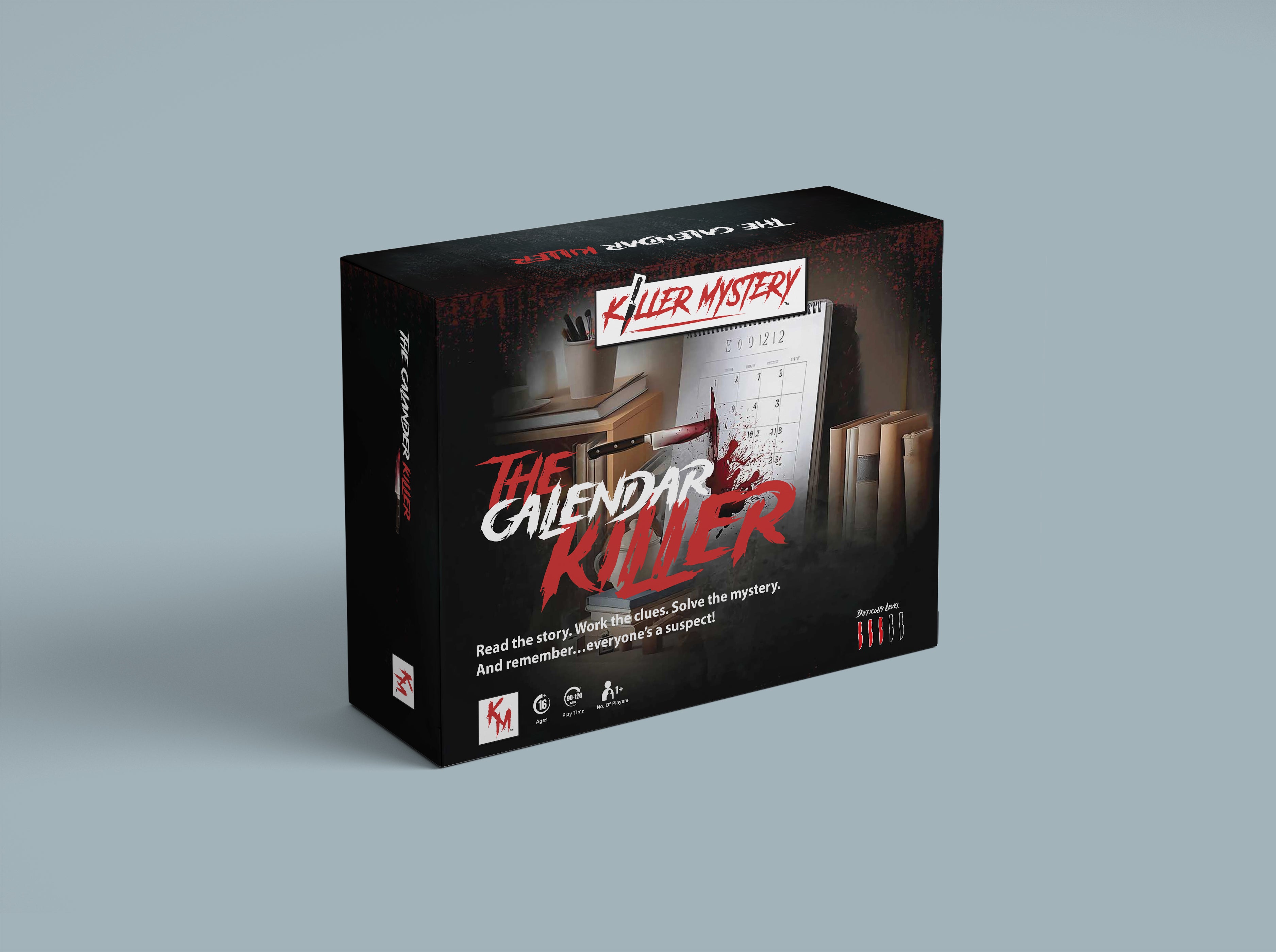
Your next family game night is one decision away. Killer Mystery builds immersive detective experiences with physical clues, story cards, and puzzles that turn an ordinary evening into a real investigation.
Frequently Asked Questions
What are some cooperative games that are suitable for teenagers?
Look for titles that give each player a distinct role and meaningful decisions rather than simple dice-rolling. Games with a moderate complexity rating, a 45-90 minute playtime, and room for 3-6 players tend to work well. Mystery and deduction games are a strong fit because teens can take ownership of clues and argue their theories. The key is that the game rewards communication and joint decision-making, not just following instructions.
How do you choose a cooperative board game for a family with teens?
Start with player count and playtime: confirm the game supports your family size and fits your available window. Next, check complexity against your least experienced player, not your most experienced one. Then read reviews for replayability and whether the theme appeals to teens. Finally, look for mechanics that force every player to contribute, such as hidden information or role-specific abilities, so no one can sit back and let others solve the game.
What makes a cooperative game fun for both teens and parents?
Shared objectives that require different strengths. Teens often want autonomy and a chance to lead, while parents want a game that keeps everyone involved without one person running the table. Games with hidden information, timed decisions, or asymmetric roles create natural handoffs. A compelling theme, such as a mystery or survival scenario, also gives the group something to talk about beyond the rules, which keeps energy up across multiple sessions.
Can cooperative games work for families with different gaming experience?
Yes, if you choose games with simple core rules and layered strategy. Beginner-friendly cooperative games let new players contribute immediately while experienced players find depth in planning and tactics. Avoid games with heavy upfront rule explanations. Instead, pick titles that teach through play, such as mystery games where clues unfold gradually. Also assign roles that match comfort levels so no one feels lost or bored.

Comments