

Table of Contents
- Start With Your Guest List, Not the Theme
- A Decision Tree for Choosing Murder Mystery Party Themes
- Popular Theme Categories and Who They Suit
- How Murder Mystery Character Roles Shape Your Theme Choice
- Murder Mystery Game Length: Matching Pacing to Your Party
- Murder Mystery Party Scripts and What They Mean for Theme Fit
- Budget and Preparation by Theme
- Frequently Asked Questions
Last Updated: October 16, 2026
Start With Your Guest List, Not the Theme
The best mystery game themes start with the people in the room, not the story you want to tell. A pirate adventure falls flat with a group that loves true crime. A gritty detective case bores a family with young teens. So before you shop, look at your guest list.
At Killer Mystery, we build our games around one idea: the right theme makes every guest feel like a suspect. That only works when the theme fits who is playing.
Here is the short version: match the theme to your group size, their ages, and how much they enjoy playing a role. Everything else follows from that.
Most hosts do this backwards. They fall in love with a theme first, then try to squeeze their friends into it. The party usually suffers.
Group Size and Relationship Dynamics
Small groups of four to six work best for intense, talk-heavy mysteries. Everyone gets a real role, and nobody hides in the corner.
Bigger groups of eight or more need themes with clear teams or lots of suspects. A crowded whodunit with too few roles leaves people watching instead of playing.
Relationship dynamics matter just as much. Couples who love a little friendly suspicion thrive on betrayal plots. A group of coworkers may prefer something lighter and sillier.
Ask yourself three quick questions:
- How many people are actually coming?
- Do they know each other well?
- Will they happily accuse a friend of murder?
If the answer to that last one is no, pick a cooperative or family-friendly theme.
Age Ranges and Comfort With Role-Play
Age sets your tone. A party with teenagers can handle spooky and dramatic. A mixed-age family gathering usually needs something nostalgic or family-friendly.
Comfort with role-play is the bigger factor. Some guests dive into a character the second they get a costume. Others freeze.
For shy groups, choose themes that let people play themselves. A detective reviewing evidence needs no acting at all. For outgoing groups, lean into full characters with costumes and accents.
A common mistake is assuming everyone wants to perform. Check first, then pick.
A Decision Tree for Choosing Murder Mystery Party Themes
Most guides list themes and leave you to guess. We prefer a simple decision tree. Answer three questions in order, and your theme picks itself.
This is the fastest way to narrow dozens of options down to two or three that actually fit your night.
Step 1: Define the Occasion and Tone
Start with the event. A birthday, a date night, a corporate team event, and a holiday party each want a different mood.
Then pick your tone:
- Spooky for Halloween and thrill-seekers
- Classy for dinner parties and adult gatherings
- Silly for casual friend groups
- Dramatic for true crime fans
- Nostalgic for decade-themed nights
The occasion usually decides the tone for you. Once you name it, half your theme options disappear.
Step 2: Match the Setting to Your Space
Your room sets the scene. A small apartment limits you to parlor-style mysteries and dinner-party plots.
A backyard or large home opens up historical estates, pirate ships, and Hollywood parties.
Think about decorations and props too. A 1920s speakeasy needs little more than dim lights and jazz. A spaceship theme demands more effort.
Match the setting to what you can actually build in an afternoon.
Step 3: Check Theme-to-Gameplay Compatibility
Some themes fit certain game formats better than others. This is the step most hosts skip.
A single-story game suits a one-night party. A multi-episode season suits a group that meets monthly.
Ask how your theme plays, not just how it looks:
- Does it need many characters or just a few?
- Does it reward teamwork or suspicion?
- Can it run in one sitting or many?
When the theme and the format line up, the night runs itself.
Popular Theme Categories and Who They Suit
Certain themes show up again and again for good reason. They work. But "works" means different things for a four-person dinner party and a twelve-person office mixer.
| Theme | Best Group Size | Tone | Role-Play Intensity | Typical Setup Time | Prep Level |
|---|---|---|---|---|---|
| Historical estate | 6-10 | Dramatic, classy | Medium-high | 2-3 hours | Medium |
| Pirates | 8-14 | Silly, rowdy | High | 3-4 hours | High |
| Spies | 6-10 | Tense, competitive | Medium | 2-3 hours | Medium |
| Superheroes | 6-12 | Fun, family-friendly | Low-medium | 1-2 hours | Low |
| Hollywood | 8-12 | Glamorous, mixed-age | Medium | 2-3 hours | Medium |
| Nostalgic decades | 6-16 | Playful, nostalgic | Low | 1-2 hours | Low |
| Haunted mansion | 6-10 | Spooky, atmospheric | Medium-high | 2-3 hours | Medium |
| True crime / detective | 4-8 | Serious, puzzle-driven | Low-medium | 1-2 hours | Low |
Historical estate themes reward guests who love detail and costumes. They suit adult dinner parties where everyone knows each other and enjoys a little formality.
Pirate themes suit louder, larger crowds. They work best when guests are comfortable being silly and don't mind a bit of chaos. Costumes are often encouraged, so give guests plenty of notice.
Spy themes fit groups that enjoy bluffing and competition. They pair well with team-based formats where guests can form alliances and then betray them.
Superhero themes are a safe bet for families with teens.
Murder Mystery Game - Subscription Box →
Hollywood themes work for mixed ages because everyone can play a version of themselves, just more glamorous. They need very little beyond good lighting and a few props.
Nostalgic decades are the most flexible option for mixed-age groups. Everyone finds a decade they remember, and the prep is minimal: music, snacks, and a few period-specific decorations.
Haunted mansion themes are ideal for Halloween or any group that loves a good scare.
True crime / detective themes are the easiest entry point for shy groups. Guests can play themselves as investigators, so no acting is required.
If you are unsure, a single-story game like The Calendar Killer lets you test a theme without a long commitment.

How Murder Mystery Character Roles Shape Your Theme Choice
Murder mystery character roles decide how your theme actually plays. A theme with too few roles leaves guests out. One with too many confuses everyone.
Count your guests, then count the roles your theme offers. They should match.
Roles come in a few types:
- Suspects with secrets to hide
- Detectives who ask the questions
- Witnesses who drop key clues
Themes built around a tight cast, like a family estate or a small crew, suit smaller groups. Themes with big casts, like a Hollywood party or a ship's manifest, suit larger ones.
Pick a theme whose cast size fits your guest list. That single check prevents the most common hosting headache.
Murder Mystery Game Length: Matching Pacing to Your Party
Murder mystery game length should match your party's energy, not the other way around. A game that drags kills the mood. One that rushes feels forgettable.
Short single-story games run in one evening. They suit weeknights, date nights, and casual gatherings.
Longer multi-episode seasons stretch across weeks or months. They suit a dedicated group that meets again and again.
Match the length to your group:
- One-night party: a self-contained story
- Monthly game night: a multi-episode season
- Date night: a compact, focused case
A common mistake is overcommitting. Start short, see how your group responds, then go bigger.
Murder Mystery Party Scripts and What They Mean for Theme Fit
Murder mystery party scripts are the backbone of the night. They hand each guest their lines, secrets, and goals. The script decides how much acting your theme demands.
Some scripts are heavy on dialogue. Guests read lines and perform scenes. These suit theatrical groups and dramatic themes.
Other scripts are light on lines and heavy on clues. Guests investigate at their own pace. These suit shy groups and puzzle lovers.
Match the script style to your crowd:
- Theatrical groups: dialogue-heavy scripts
- Puzzle lovers: clue-driven scripts
- Mixed groups: scripts with optional acting
The theme and the script should pull in the same direction. A spooky theme with a joke-filled script feels off. A classy theme with frantic dialogue feels rushed.
Budget and Preparation by Theme
Every theme carries a hidden cost in time and money. Knowing it upfront saves you a scramble the day before. This section breaks down what each theme actually demands so you can pick one that fits your budget and your calendar.
Low-prep themes need almost nothing. A nostalgic decade party runs on music, snacks, and a few props. A spy theme needs little more than envelopes and name tags. A true crime / detective theme often works with just printed clues and a comfortable seating arrangement.
Medium-prep themes ask for some planning but won't consume your week. Historical estate, Hollywood, and haunted mansion themes fall here. You'll want a few decorations, maybe a playlist, and invitations that set the tone.
High-prep themes demand real effort. Pirate and large-scale historical themes often need costumes, decorations, and set dressing. If you're hosting a pirate party for twelve, you may spend 3-4 hours on setup and a significant amount on costumes and props. These themes are rewarding but require commitment.
Plan around three buckets:
- Costumes: optional or required? If required, give guests at least two weeks' notice and suggest low-cost options.
- Decorations and props: minimal or elaborate? A few well-chosen items can transform a room more than a pile of random decorations.
- Invitations and music: digital or printed? Digital invitations save money; a curated playlist sets the mood for free.
A note on accessibility and inclusion: When choosing a theme, consider whether costumes and roles are comfortable for all guests. Mobility needs, sensory sensitivities, and social comfort all matter. A theme that requires standing for long periods or wearing restrictive costumes may exclude some guests.
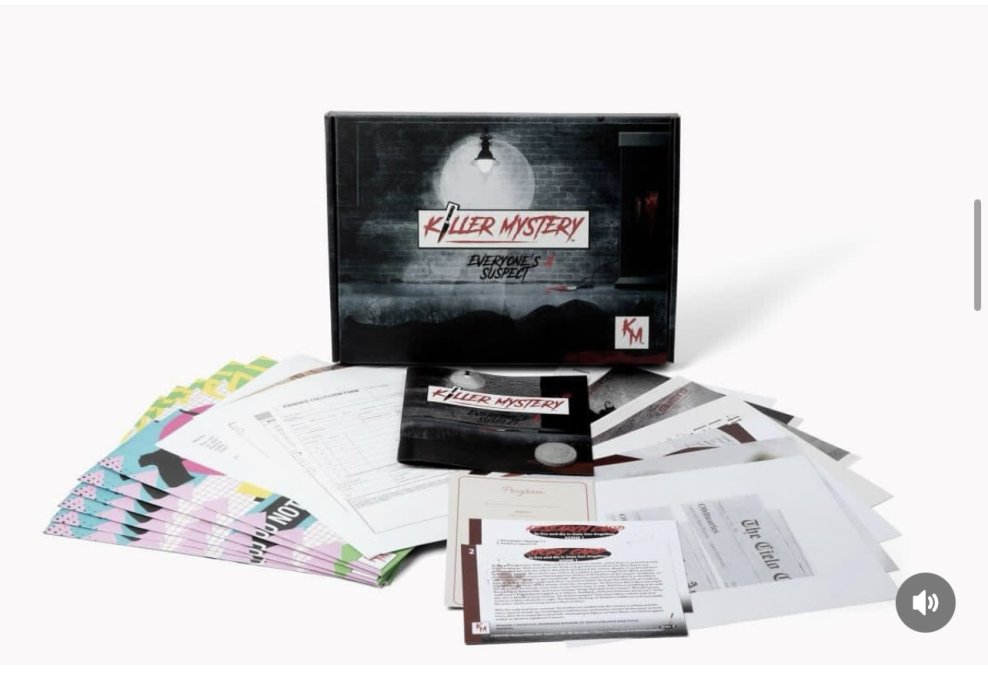
For hosts who want the storytelling without the setup, a complete box set does the heavy lifting. Our subscription box delivers a new episode each month, and our box sets pack a full season into one shipment.

Frequently Asked Questions
How do I choose a murder mystery theme for my group?
Start with your guest list. Consider group size, ages, and how comfortable people are with role-play. A silly 1980s theme suits friends who love costumes, while a classy historical setting works for guests who prefer subtle participation. Match the tone to your crowd, then pick a setting that fits your space and budget. When mystery game themes align with your group's interests, everyone stays engaged from the first clue to the final reveal.
How long should a murder mystery game last?
Most murder mystery games run 60 to 120 minutes per session. Single-story games like The Calendar Killer wrap up in one sitting, typically around two hours. Multi-episode experiences such as the subscription box spread the investigation across five monthly episodes, with each session lasting about an hour. Match the murder mystery game length to your party schedule so the pacing feels satisfying rather than rushed or drawn out.
What should I consider when choosing a mystery game for different ages?
Younger teenagers do well with family-friendly themes that avoid graphic content, while adults can handle darker or more complex storylines. Check the game's recommended age range before buying. If your group spans generations, pick a theme with broad appeal like a nostalgic decade or a historical setting. Murder mystery character roles should give every player something meaningful to do, regardless of age, so no one feels left out.
What are some good themes for mystery stories?
Popular murder mystery party themes include 1980s glamour, historical whodunits, pirate adventures, spy thrillers, Hollywood scandals, and superhero capers. Each theme sets a distinct tone: spooky, silly, dramatic, or classy. The right choice depends on your guests' interests and the occasion. A corporate event might suit a classy spy theme, while a family game night could lean toward a nostalgic or family-friendly setting. Pick the theme that gets your group excited to investigate.
Comments