

Last Updated: November 1, 2026
Quick Summary
To interview a cold case witness, prepare first by re-reading original statements, separating established facts from claims, and setting your own theory aside. Then run free recall with neutral, open-ended prompts before introducing details from the prior statement, so you can see what the cold case witness remembers unprompted.
- Keep the suspect's name, your working theory, and unprovided details off the interview script entirely.
- Run free recall first, then introduce points from the original statement only after it ends.
- Use context reinstatement, reverse order, cognitive interview, and sketching to surface old memories.
- Classify each inconsistency as drift, source confusion, rehearsed script, or deliberate change, with your reasoning.
- Record if the witness agrees, keep written notes as backup, and log the interview the same day.
Table of Contents
- Why Cold Case Witness Interviews Fail (and What to Do First)
- Cold Case Witness Interview Questions That Open Memory
- Building a Witness Interview Script That Stays Neutral
- Memory Recall Interview Techniques for Years-Old Events
- Your Investigative Interview Checklist, Start to Finish
- Reading Inconsistencies and Separating Memory From Hearsay
- Test Your Interview Skills on a Killer Mystery Case
- Frequently Asked Questions
Why Cold Case Witness Interviews Fail (and What to Do First)
Most cold case witness interviews fail before the first question is asked.
Cold case witness interviewing is the process of re-questioning people about events that happened years or decades ago, using memory science and neutral questioning to pull out details the first investigation missed.
Here is what most guides get wrong. They treat a cold case witness as a fresh lead. That person is not fresh.
Before you schedule anything, do three things:
- Re-read the original statements and note every contradiction
- List what is already established fact versus what is only an investigative claim
- Write down your own theory, then set it aside so it cannot steer the questions
That last step matters most. A common mistake is walking in to confirm a name. The witness senses it and starts agreeing with you.
Cold Case Witness Interview Questions That Open Memory
Open-ended prompts beat specific questions for years-old events. Start broad, let the witness talk, and save the details for later.
The first ten minutes should contain almost no questions. Ask the witness to describe the day, the place, and the people in their own words. Then stay quiet.
Good opening prompts:
- "Tell me everything you remember about that evening, starting from when you woke up."
- "Walk me through the location as you picture it now."
- "Who else was around, and where were they standing?"
Questions to Ask When Reinterviewing a Witness
Reinterviews need to respect that the person already gave a statement. Acknowledge it, then ask for what the first round missed.
- "What did the first investigator not ask you?"
- "Has anything come back to you since then?"
- "What part of your original statement are you least sure about?"
That last question often explains a changed story. A witness who discussed the case with a neighbor may have absorbed the neighbor's version.
Building a Witness Interview Script That Stays Neutral
A witness interview script is a written framework of neutral prompts that keeps an interview consistent without telling the witness what to say. The script guides you; it should never lead the witness. A script built around open prompts can help avoid steering the witness toward a preferred version of events.
Build yours in four blocks, and write the actual wording for each block before you sit down:
- Opening: explain the purpose, confirm the witness can stop or take a break, and state that you are recording for accuracy
- Free recall: broad prompts, no interruptions, no follow-up until the witness runs out of steam
- Focused recall: specific topics, still open-ended, drawn from gaps in the original statement
- Close: ask for anything missed and how to reach them again
How to Avoid Leading Questions
Leading questions plant the answer. "Was the car red?" suggests red. "What do you remember about the car?" does not. The fix is mechanical: replace yes/no framing with "what," "how," and "describe" stems, and strip out any detail the witness has not already volunteered.
Swap these:
- "Was he angry?" becomes "How did he seem?"
- "Did you see a knife?" becomes "What did you notice in his hands?"
- "You saw them argue, right?" becomes "What happened between them?"
Small word changes protect the evidence. They also protect you if the case ever reaches a courtroom.
Scripting the Reinterview Without Contaminating It
A reinterview script needs one extra block the first-interview script does not: a neutral acknowledgment of the prior statement. Do not read the old statement back to the witness before free recall, because that anchors the new account to the old one and makes genuine memory drift impossible to detect.
Instead, script it this way:
- Open with a neutral reference: "You spoke with an investigator years ago. I want to hear it in your own words today before we compare anything."
- Run free recall first, exactly as in a first interview.
- Only after free recall ends, introduce specific points from the original statement and ask the witness to react to them.
That sequence lets you see what the witness remembers unprompted, then what changes when the old statement is introduced. The difference between the two is often the most useful thing in the file.
What the Script Should Never Contain
Keep three things off the page entirely: the suspect's name, your working theory, and any detail the witness has not already provided. A script that names a suspect turns every open prompt into a confirmation exercise, and the witness will sense the direction even if you never ask a leading question directly.
A neutral script is also a documentation asset. If the interview is later challenged, the script shows the questions were fixed in advance and not tailored to produce a particular answer.
Memory Recall Interview Techniques for Years-Old Events
Time damages memory in predictable ways. Use techniques that work with that damage instead of pretending it isn't there.
The most useful techniques:
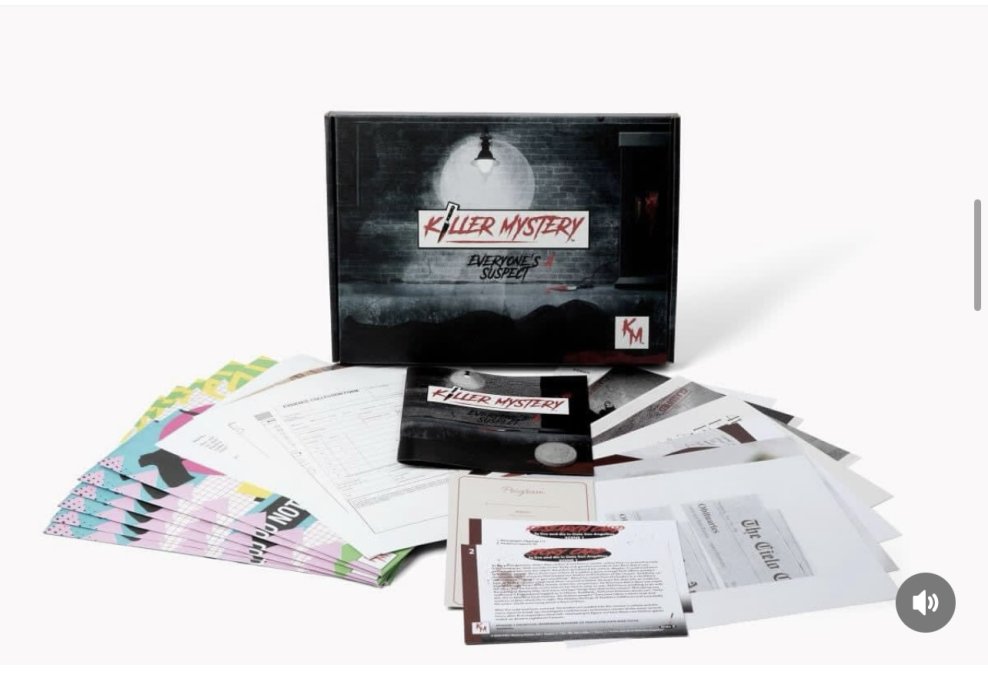
Murder Mystery Game - Subscription Box →
- Context reinstatement: ask the witness to picture the weather, sounds, and smells of that day
- Reverse order: have them describe the event from the end backward, which breaks rehearsed scripts
- Cognitive interview: combine free recall, changed perspective, and sensory prompts
What most guides miss is how much a witness's confidence matters, and how little it tracks accuracy. A hesitant witness can be right. A certain one can be repeating a story they have told so often it feels like memory.
Your Investigative Interview Checklist, Start to Finish
An investigative interview checklist is a step-by-step list that keeps every interview consistent, documented, and reviewable. Run it every time.
- Review the original statement and flag contradictions
- Note established facts versus unverified claims
- Write your theory down, then set it aside
Recording and Documentation
Documentation is the backbone of a cold case witness interview. Record if the witness agrees, and always keep written notes as backup.
Log the date, start and end times, who was present, and the exact wording of key answers. Note pauses and hesitation too.
Watch out: paraphrasing an answer in your notes instead of quoting it can quietly change its meaning by the time anyone reads it.
Reading Inconsistencies and Separating Memory From Hearsay
Not every inconsistency is a lie. Most are memory drift, and some are hearsay dressed up as firsthand knowledge. The practical problem is that all three look similar in a transcript, so you need a repeatable way to sort them before you decide what a changed detail means.
Ask yourself three questions about each claim:
- Did the witness see it, or hear it from someone?
- Does the detail match other supporting evidence?
- Could time or retelling explain the change?
A Practical Framework for Sorting Inconsistencies
It can help to classify each inconsistency into one of four buckets before drawing any conclusion:
- Drift: the core detail holds but peripheral details shift (a color, a time, a sequence). This is normal and often increases with retelling.
- Source confusion: the witness genuinely believes they saw something they actually heard from a neighbor, a news report, or another witness.
- Rehearsed script: the account is suspiciously smooth and identical across retellings, which can indicate the witness has told it so often it has hardened into a fixed story.
Document which bucket each inconsistency falls into and why. That note is what lets a reviewer later see your reasoning instead of guessing at it.
Hearsay: The Quiet Killer of Cold Cases
Hearsay is the quiet killer of cold cases. A witness who says "everyone knew he did it" is repeating a rumor, not reporting an observation. Mark it as hearsay and move on.
The harder case is the witness who cannot tell the difference anymore. After years of conversation, a rumor can feel like a memory.
A useful probe is to ask how they came to know the detail, not what the detail is: "When did you first learn that?" and "Who else was there when you saw it?" A firsthand memory usually comes with a setting.
Documenting the Difference
Record the inconsistency, the bucket you assigned it to, and the reason in the same note. Quote the witness's exact wording rather than paraphrasing, because a paraphrase can quietly change the meaning by the time anyone reads it. Note pauses and hesitation too, since a long silence before an answer can matter as much as the words.
For a deeper look at spotting patterns across testimony, see our guide on how to spot patterns in unsolved crimes. And if you want to practice questioning every witness statement yourself, our collection of mysteries that make you question every witness statement puts you in the interviewer's chair.
Test Your Interview Skills on a Killer Mystery Case
Reading about interview technique only gets you so far. You learn to question a cold case witness by doing it, with real clues in front of you and suspects who do not cooperate.
Our games are built for this kind of practice. In The Calendar Killer, you work a complete single-story case at your own pace, reviewing evidence and deciding which witness detail holds up. If you want to practice at home first, you can solve a cold case at home and test your instincts before you commit to a full season.

Prefer a case that unfolds over time? Our monthly subscription box delivers one new episode each month for five months, with story cards, research cards, physical clues, and puzzles that build on each other.
Customers such as Corinne D., Gary R., and Trinity S. have left five-star reviews of our games.
Frequently Asked Questions
How do you interview a witness in a cold case?
Start by reviewing the original statement and case file so you know what the witness already said. Open with free recall, asking the witness to describe the event in their own words without interruption. Then move to open-ended cold case witness interview questions about people, places, and sequence. Record the session, document timestamps, and close by asking whether anything else comes to mind. Patience matters more than speed when years have passed.
How can investigators help a witness recall details from years ago?
Use memory recall interview techniques that rebuild context: ask about sounds, smells, weather, and what the witness was doing that day. Return to the same topics from different angles rather than repeating one question. Show photographs of locations only after free recall is exhausted. Avoid feeding details, because a witness who adopts your words gives you a statement you cannot defend later.
Should a cold case witness interview be recorded?
Record it whenever the witness agrees, and note the start and stop times in your investigative interview checklist. A recording preserves the witness's own wording, which matters when you later compare statements or prepare for courtroom presentation. If recording is not possible, write a detailed report in the witness's language, read it back, and have them confirm the accuracy.
How do you distinguish a witness's memory from information learned later?
Ask how they know each detail: did they see it, hear it, or read it somewhere? Witnesses often absorb news coverage or rumors without realizing it. A witness interview script that includes a direct question about other sources helps you separate firsthand memory from secondhand information, which keeps your evidence findings honest and your conclusions defensible.
Cold case witness interviews reward patience and punish assumptions. Practice the neutral question, the free recall, and the documented note, and you will read testimony more clearly. Killer Mystery builds cases that put those skills to work, with physical clues, research cards, and puzzles that keep you guessing until the last episode. Get started with Killer Mystery and turn your next game night into a case worth solving.

Comments