

Last Updated: October 24, 2026
Quick Summary
To identify patterns in unsolved crimes, build a case linkage framework: standardize each case file, list facts in a comparison matrix, and score similarities rather than relying on gut feelings. Document every linkage decision and the reasons behind it, because a pattern only counts when the differences are explainable.
- Standardize records with a data dictionary so each case speaks the same language.
- Fill in a comparison matrix before discussing theories; blank cells show missing records.
- Score strong matches 2 points, weak matches 1, and mismatches 0.
- A real linkage needs at least two of three to line up: victims, methods, timing or places.
- Write your hypothesis down before reviewing files to avoid confirmation bias.
Table of Contents
- Start With a Case Linkage Framework
- Crime Pattern Analysis Examples That Show Real Linkage
- Compare Victim Characteristics and Modus Operandi
- Use a Crime Scene Investigation Checklist for Forensic Evidence
- Map Time of Offense and Geographic Location
- How to Avoid Confirmation Bias in Investigations
- Cold Case Investigation Techniques for Testing a Theory
- Practice Pattern Recognition With a Killer Mystery Case
- Frequently Asked Questions
Start With a Case Linkage Framework
Case linkage is the practice of comparing separate unsolved crimes to decide whether one offender may be responsible for more than one of them.
Here is the framework we recommend. It works for a case review, a cold case file, or a game night.
- Collect every case file you can access.
- Standardize the facts so each case speaks the same language.
- List the facts in the same order for each case.
- Compare one category at a time.
- Score similarities, not gut feelings.
- Write down what does not match.
- Record your linkage decision and the reasons behind it.
That last step matters most. A pattern only counts when the differences are explainable and the decision is documented.
Standardize the Records Before You Compare
Most case files are messy. One report lists a time as "early evening," another as "18:40." One lists a victim's job as "nurse," another as "healthcare worker." If you compare raw records, you will miss real links and invent false ones.
Before you build a matrix, create a data dictionary, a short list of the fields you will compare and the allowed values for each. For example:
- Date and time: Convert every entry to a 24-hour clock and a single date format. If a report says "sometime after midnight," record a window, not a point.
- Location type: Use a fixed list such as residence, commercial, vehicle, outdoor, transit, or workplace. Do not mix "parking lot" and "outdoor" unless you define the difference.
- Victim profile: Record age as a number, not a range, when known. Record occupation using a standard category.
A common pattern is that missing data clusters in older cases. Treat a blank cell as a gap in the record, not as evidence of absence.
Build Your Comparison Matrix
A comparison matrix is a simple grid with one case per row and one category per column. Analysts use this format because it forces you to look at every case the same way.
| Category | Case A | Case B | Case C |
|---|---|---|---|
| Victim profile | Age, job, routine | Age, job, routine | Age, job, routine |
| Method | How entry was gained | How entry was gained | How entry was gained |
| Time of offense | Day and hour window | Day and hour window | Day and hour window |
| Location type | Home, lot, route | Home, lot, route | Home, lot, route |
| Evidence left | Physical items | Physical items | Physical items |
| Statements | Witness accounts | Witness accounts | Witness accounts |
Fill in the matrix before you discuss theories. Blank cells are useful too, because they show where records are missing.
Score Similarities and Document the Decision
A matrix shows you what matches. It does not tell you whether the matches matter. Use a simple scoring rule so your linkage decision is repeatable:
- Strong match (2 points): The detail is specific and unusual, a rare tool mark, a distinctive entry method, a narrow time window.
- Weak match (1 point): The detail is common, a weekday offense, a residential location.
- Mismatch (0 points): The details conflict and you cannot explain why.
Add up the points, but do not treat the total as a verdict. A single strong match can outweigh several weak ones. A cluster of weak matches usually means you are looking at common crime, not a series.
Write a short linkage note for each pair of cases: the score, the strongest match, the biggest mismatch, and what evidence would change your mind. That note is what separates a documented lead from a hunch.
Crime Pattern Analysis Examples That Show Real Linkage
Crime pattern analysis examples usually fall into three groups: similar victims, similar methods, and similar timing or places. A real linkage needs at least two of the three to line up.

Picture three burglaries in different neighborhoods. In each one, the offender enters through a rear window, takes only small electronics, and strikes on a weekday afternoon. The victims have nothing in common. The method and timing do.
Now picture a case where the method matches but the timing does not. One offense happened at 2 a.m., the others at noon. That gap weakens the link.
Pattern recognition is the skill of spotting these overlaps without forcing them. The National Institute of Justice's overview of criminal investigative analysis explains how analysts study behavior to support investigations.
Compare Victim Characteristics and Modus Operandi
Victimology is the study of who the victims were: their age, work, routines, relationships, and risk factors. Modus operandi, usually shortened to MO, is how the offender carried out the crime. Comparing both is where most linkages are won or lost.
Start with victim characteristics:
- Age range and occupation
- Daily routines and travel routes
- Social circles and known contacts
Then compare MO:
- How the offender gained entry or approach
- What tools or weapons were used
- What was taken or left behind
A common mistake is treating a shared victim trait as proof of a link. Similar victims can attract different offenders. Similar methods are harder to copy by accident.
Use a Crime Scene Investigation Checklist for Forensic Evidence
A crime scene investigation checklist keeps evidence review consistent from case to case. Without one, important details get skipped, and skipped details break linkages.
Use this checklist for each case you compare:
- Were photographs taken before anything was moved?
- Was physical evidence collected, logged, and preserved?
- Were bloodstain patterns documented and measured?
Forensic evidence links cases when the same material, tool mark, or pattern shows up twice. But evidence processing varies between departments.
If you enjoy working through puzzle-style evidence yourself, our guide on how to decode puzzle evidence walks through the same logic step by step.
Map Time of Offense and Geographic Location
Mapping time and place turns a loose hunch into something you can test.
Murder Mystery Game - Subscription Box →
Look for these signals:
- A cluster of offenses inside a short travel radius
- A repeating day of the week or hour window
- A pattern that shifts outward over time
Crime mapping has limits. People commute, and a single offender can strike far from home. A tight cluster is a lead, not a conclusion.
Watch out: a map that only shows dots hides the streets between them. Check routes, transit stops, and shift schedules before you decide two locations are connected.
How to Avoid Confirmation Bias in Investigations
Confirmation bias is the tendency to notice evidence that supports a theory you already believe and ignore evidence that does not. It is the single biggest threat to sound case linkage.
How to avoid confirmation bias in investigations comes down to a few habits:
- Write your hypothesis down before you review the files.
- List the facts that would disprove it.
- Have someone else review your matrix cold.
Analysts who work a series backward, starting from the answer, tend to see links that are not there. Work forward from the evidence instead.
Test Whether the Pattern Is Meaningful
A pattern is meaningful only when it is unlikely to appear by chance and when alternative explanations have been ruled out.
Base rates. Ask how common the shared detail is in the broader pool of similar crimes. A weekday-afternoon burglary is common; a specific tool mark is not.
Alternative explanations. For every match, list at least two innocent reasons it could appear:
- The same patrol area produced similar reports.
- The same type of property is easy to enter.
- The victims share a routine because of their jobs, not because of an offender.
If an innocent explanation fits, the match is weak until you can rule it out.
Validate Before You Call It a Series
Validation means checking your proposed link against evidence you did not use to build it. A few practical checks:
- Hold-out details. Set aside one category, say, witness statements, while you build the link. Then see whether the held-out category supports it.
- Independent confirmation. Look for a detail that appears in two cases through separate records, not through the same report copied twice.
- Falsification test. Ask what you would expect to see if the cases were not linked. If the evidence looks the same either way, the link is not proven.
Keep a Bias Log
Write down each time you catch yourself favoring a theory. Note the fact you were tempted to ignore and why. Over time, the log shows your own blind spots, and it makes your linkage notes more credible to anyone who reviews them.
If you want to practice testing a theory against hold-out evidence, solve a cold case at home and keep a bias log beside your matrix. For a deeper look at the full method, our article on how to solve complex cold cases goes further than this section can.
Cold Case Investigation Techniques for Testing a Theory
Cold case investigation techniques focus on testing a theory rather than proving it. That difference in mindset matters.
Start with a case review.
Then test your investigative hypothesis against each case in your matrix. Does it explain the similarities and the differences?
Corroboration is the goal. One shared detail is a lead. Three independent details that point the same way are a case.
Practice Pattern Recognition With a Killer Mystery Case
Pattern recognition improves with repetition. The more cases you compare, the faster you spot the overlaps that matter and the false positives that do not.
That is exactly why we built our games the way we did. Each case gives you story cards, research cards, physical clues, and puzzles to compare, so you practice the same skills analysts use: building a matrix, weighing evidence, and testing a theory before you name a suspect.
Two ways to start:
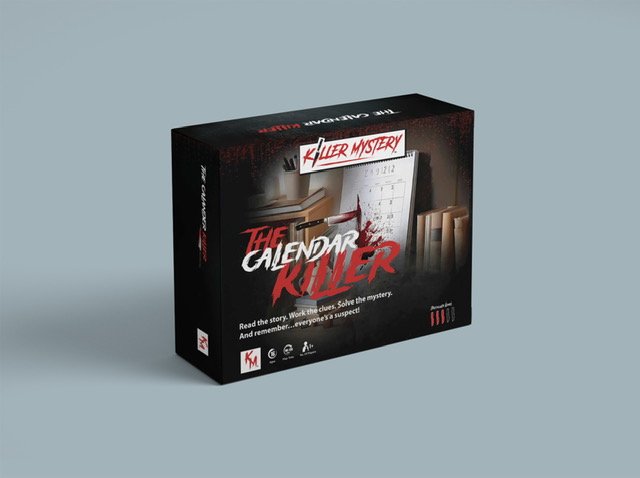
- The Calendar Killer is a complete single-story case in one box. No subscription, no waiting. You get the full mystery and solve it at your own pace.
- The murder mystery subscription box delivers one new episode each month for five months. Each episode builds on the last, so you compare clues across a longer timeline. Month-to-month plans run $29.00 plus taxes and shipping, and the season pass is $129.00 billed once.
Both are built for solo play or a group, and both reward the reader who keeps a comparison matrix open beside the clues. If you already know you want a recurring challenge, the subscription box keeps new cases coming. A digital gift card lets them choose their own first case, and our merchandise makes a fitting companion for anyone who likes to wear their sleuthing habit on their sleeve.

Frequently Asked Questions
How do investigators connect seemingly unrelated unsolved crimes?
They compare cases on multiple dimensions at once: victim characteristics, modus operandi, time of offense, geographic location, and physical evidence. A single match means little, but when several dimensions line up across cases, investigators have a case linkage worth pursuing. Databases and algorithms help surface candidates, but a human still has to review the case records and confirm the pattern holds up.
What clues can link multiple crimes?
Physical and forensic evidence carries the most weight: DNA, fingerprints, tool marks, and bloodstain patterns. Behavioral similarities matter too, such as how an offender approached a victim or what was taken. Investigators also look at sequence of events, statements from witnesses, and overlooked details in case records. The strongest linkages combine forensic evidence with behavioral and geographic similarities rather than relying on any one clue.
How many crimes go unsolved a year?
Clearance rates vary widely by offense type and jurisdiction, so there is no single national figure. Violent crimes generally clear at higher rates than property crimes, and many cases remain open for years before being classified as cold cases. The practical takeaway for pattern analysis is that a large pool of unsolved crimes exists, which is exactly why systematic case review and crime databases matter for finding connections.
How do you avoid confirmation bias when analyzing evidence?
Write down your hypothesis before reviewing the evidence, then actively look for details that contradict it. Have a second person review your case linkage independently. Keep a record of what you ruled out, not just what fit. Confirmation bias in investigations shows up when analysts only count the similarities and ignore the differences, so treating disconfirming evidence as equally important is the core discipline.
Spotting patterns in unsolved crimes is a skill, and like any skill it gets sharper with practice. Killer Mystery gives you that practice in a form you can play: immersive detective stories with real clues to compare, suspects to track, and a case to close. Start with a single story or a monthly subscription box, gather your friends and family, and see whether you can spot the pattern before the killer slips away.

Comments