

Last Updated: October 22, 2026
Quick Summary
Immersive mystery games turn game night into a real investigation where you examine physical evidence, interrogate suspects, and build a theory with friends or family. They keep groups engaged because everyone has a role, and you can run a complete case at home in about 15 minutes of setup.
- Immersion comes from physical evidence you handle, clues revealed in waves, and players choosing which leads to chase.
- Tabletop mystery games work best with 2 to 8 players and cost $30 to $130 per box.
- The Calendar Killer is a complete single-story case for $39.99, ideal for a first try.
- The '80s Were Killer box set delivers all five episodes at once for $129.99.
- Hosting takes about 15 minutes of setup: read the welcome booklet, stage the table, assign light roles, and read the opening aloud.
Table of Contents
- Why Play Immersive Mystery Games? The Case for a Real Investigation
- What Makes a Mystery Game Immersive
- The Thrill of the Hunt: How Players Investigate a Case
- Mystery Board Games vs. Video Games vs. Live Experiences
- Murder Mystery Games for Game Night: Why Groups Keep Coming Back
- Play-at-Home Detective Games: Immersion Without Leaving the Couch
- How to Host a Murder Mystery Game: A Simple Game Plan
- Picking Your First Immersive Mystery Game
- Frequently Asked Questions
Why Play Immersive Mystery Games? The Case for a Real Investigation
Immersive mystery games are story-driven experiences where you become the detective, working through physical evidence, suspect files, and puzzles to solve a case.
Most game nights follow the same pattern. Someone picks a board game, everyone learns the rules, and two hours later the box goes back on the shelf.
Below, we break down why these games hold people's attention, how the investigation works, and how to pick the right one for your group.
What Makes a Mystery Game Immersive
Immersion comes from three things: a story you care about, evidence you can physically handle, and choices that feel like they matter. A mystery game becomes immersive when the case stops feeling like a puzzle on a card and starts feeling like something you are personally trying to crack.
In a standard board game, components are tools for scoring points. In an immersive mystery, they are evidence, a torn letter, research cards, and a suspect profile all carry information you have to weigh.
That shift changes how your brain engages: you are not optimizing a score, but building a theory and testing it against the facts. Many players say the moment it clicks is when they stop reading and start interrogating each other about what a clue really means.
The Thrill of the Hunt: How Players Investigate a Case
An investigation moves through a repeatable loop: gather evidence, examine it closely, form a theory, then test that theory against the next clue. The thrill comes from the loop tightening as the suspect list shrinks.
Examining Clues, Interrogating Suspects, and Building a Theory
Clue examination is where careful players separate themselves. A common mistake is reading a clue once and moving on.
Interrogating suspects works the same way. You are not looking for a confession. You are looking for inconsistency.
Building a theory means writing it down. Groups that keep a shared notes page solve cases faster because they can see which leads are followed and which are still open.
- Gather evidence: collect story cards, research cards, and physical clues as they appear
- Examine closely: ask what each clue rules out, not just what it points to
- Interrogate: compare each suspect's account against the physical evidence
Mystery Board Games vs. Video Games vs. Live Experiences
Mystery entertainment comes in three main formats, each trading off differently on immersion, effort, and social connection. Knowing which fits your group is the fastest way to avoid a dud game night. The table below is a starting point, but the real decision comes down to four questions: group size, play time, budget, and story intensity.
Mystery board games put physical components in your hands and keep everyone at the same table. They are the easiest to run at home and the most social, because every player sees the same evidence at once.
Video games offer deep atmosphere and polished storytelling, but they are usually a solo experience.
Live experiences deliver the highest immersion through actors and sets, but they cost the most and require travel and scheduling.
| Format | Immersion | Social Play | Effort to Run | Typical Cost | Best For |
|---|---|---|---|---|---|
| Mystery board games | High | High | Low | $30-$130 per box | Game night at home |
| Video games | High | Low | Low | $20-$70 per title | Solo players |
| Live experiences | Very high | Medium | High | $50-$150 per person | Special occasions |
A Practical Selection Guide
Use these four questions to narrow the field before you buy:
- Group size: With 2 to 4 players, a single-story tabletop case is a good fit.
- Time: A multi-episode season spreads the same investigation across several nights.
- Budget: Tabletop boxes are a one-time purchase.
For most groups, tabletop mystery games hit the best balance: real evidence, real conversation, and a case you can run in your own living room. If you are unsure, start with a single-story box and size up a longer season once you know how your players think. Developing a knack for deduction through these tabletop sessions often sparks a deeper appreciation for the narrative pacing found in a cozy mystery series.
Murder Mystery Game - Subscription Box →
Murder Mystery Games for Game Night: Why Groups Keep Coming Back
Murder mystery games for game night work because they give a group something to do together that is not passive. Everyone has a job.
That structure is why groups return to them. A mystery gives you a fresh case with new suspects and new evidence each time you open a box.
The social side matters too. These games create conversation naturally, because the case gives everyone something specific to debate.
Play-at-Home Detective Games: Immersion Without Leaving the Couch
Play-at-home detective games bring the investigation to your table with no travel, no actors, and no scheduling headaches.
The format suits couples and families especially well. A date night becomes a shared investigation instead of another movie.
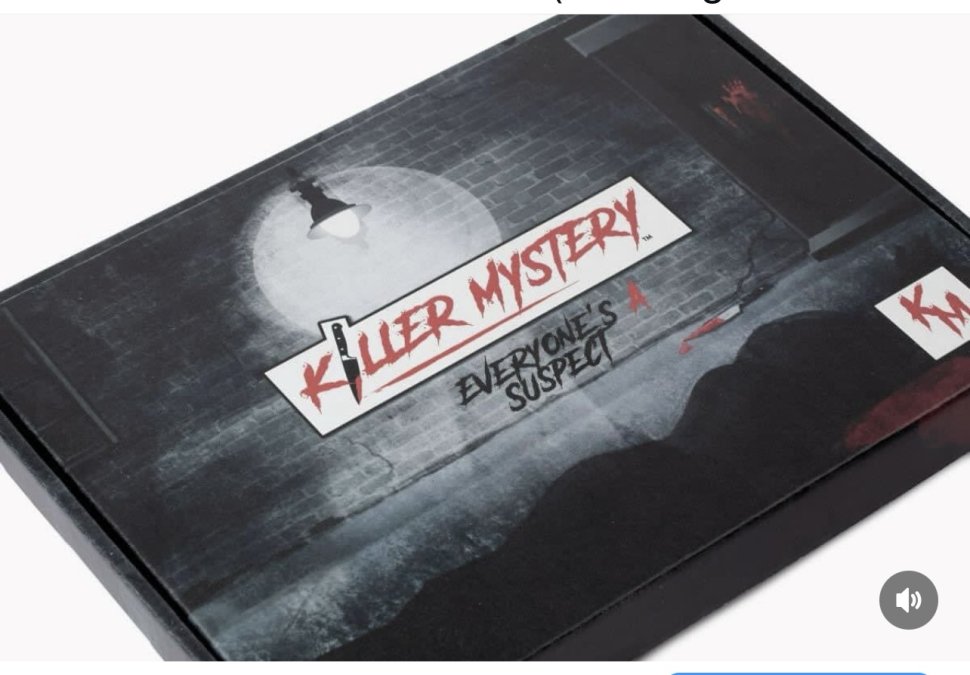
Killer Mystery builds these games around physical clues and guided research cards, so the investigation has structure without feeling like a worksheet. You are not guessing at random.
If you are new to the format, a single-story game is the easiest entry point. Groups that want a longer case can work through a full season at their own pace with The '80s Were Killer box set for $129.99.

How to Host a Murder Mystery Game: A Simple Game Plan
Hosting a murder mystery game takes about 15 minutes of setup and a little staging. The goal is to make the evidence feel like it arrived from a real case file, not a game box. Immersion in practice comes from five levers: physical evidence, narrative pacing, sound, props, and player agency.
- Pick your case and read the welcome booklet first. Know the cast and the opening situation before guests arrive. The welcome booklet sets the narrative pacing, so read it twice.
- Set the table as an investigation station. Lay out story cards, research cards, and physical clues in labeled folders. Physical evidence works best when players can pick it up, turn it over, and pass it around, a torn letter carries more weight in hand than on a screen.
- Assign light roles. A lead investigator keeps discussion moving, a note-taker tracks the timeline, and a skeptic challenges easy answers. Roles give players agency without requiring anyone to act.
- Read the opening aloud. Set the scene, then let the group start examining evidence. Reading aloud is the cheapest immersion tool you have, it signals the case has started and gives the group a shared entry point.
- Work one episode at a time. Resist the urge to rush. Let the group build a theory before the next clue lands. Pacing is the difference between a case that unfolds and a case that dumps information.
- Hold a final accusation round. Each player names a suspect and gives one piece of supporting evidence before you reveal the solution.
How Immersion Works in Practice
Immersion is not a single feature. It is the sum of small choices that make the case feel real:
- Physical evidence: Props and printed clues give players something to handle. A folder of suspect files feels like an investigation; a stack of cards feels like a game.
- Narrative pacing: Reveal clues in waves, not all at once. A case that tightens over several episodes holds attention longer than a single dump of evidence.
- Sound: Background music or ambient noise at low volume sets tone without distracting. Silence works too, but sudden silence after a reveal can land harder than any soundtrack.
Picking Your First Immersive Mystery Game
Choosing your first game comes down to four questions: how many people are playing, how long you want to play, what you want to spend, and how intense you want the story to be.
For a first purchase, match the format to your group. Solo players and couples do well with a single story they can finish in one sitting.
Killer Mystery offers three ways in, and the right pick depends on your group:
- Single story: The Calendar Killer at $39.99 is a complete case in one box, ideal for a first try or a gift.
- Complete season: The '80s Were Killer box set at $129.99 delivers all five episodes at once for groups that want to binge the case.
- Subscription: the monthly subscription box starts at $29.00 per month, with a season pass at $129.00.
If you are worried about difficulty, start with a single story and see how your group handles the evidence.

Frequently Asked Questions
What makes an immersive mystery game different from a regular board game?
A regular board game gives you rules and a board. An immersive mystery game gives you a story, characters, and physical evidence you have to interpret. You are not moving pieces around a track; you are reading research cards, examining clues, and building a theory about who committed the crime. That narrative layer is what separates immersive mystery games from standard tabletop titles, and it is why the experience sticks with players long after the box closes.
How long does it take to play an immersive mystery game?
It depends on the format. A single-story game like The Calendar Killer is built to be solved in one sitting, so you can finish the case in an evening. Season-based games work differently: the Killer Mystery subscription box delivers one episode per month for five months, so each session runs shorter while the full case builds over time. Box sets give you all five episodes at once so your group can set its own pace.
Do you need acting experience to enjoy a murder mystery game?
No. You do not have to perform or stay in character to solve the case. The story cards give you character details and backstory, but the core of the game is reading evidence, comparing suspects, and reasoning through the clues. Groups that want to lean into role-play can, and groups that prefer straight detective work can skip it. The mystery works either way, which makes these games easy to bring to a mixed group.
Can immersive mystery games be played with family or friends?
Yes, and group play is where these games shine. Families with teenagers can work the case together, couples can treat it as a date night, and hosts can build a whole gathering around one investigation. Because everyone reads the same evidence and debates the same suspects, the game gives a group something concrete to talk about for hours. Solo play is also an option if you want to test your own deduction skills first.
Picking the right mystery game is the difference between a box that sits in the closet and a game night your group talks about for weeks. At Killer Mystery, we build immersive cases around physical clues, guided research cards, and stories that keep you guessing from the first episode to the final accusation. Start with a single story or subscribe to the monthly box and get a new case delivered to your door. Get started with Killer Mystery and turn your next game night into a real investigation.
Comments