

Last Updated: November 17, 2026
Quick Summary
Detective board games work at parties when the format matches the room: tabletop deduction games suit four to eight focused players, hosted murder mysteries fit social crowds, and team-based games handle larger groups. Past eight players, split into teams of three or four with duplicate clue sets.
- Tabletop deduction games are best for groups of four to eight who want to solve a puzzle together.
- Past about eight players, split the party into teams of three or four with their own clue copies.
- Plan 20 to 30 minutes of prep for a single-box case and 45 minutes for hosted role-play.
- For a single-box case, plan 60 to 90 minutes of play plus setup and cleanup.
- Explain the rules in under five minutes, then start, to keep a casual crowd engaged.
Table of Contents
- The Short Answer: When Detective Board Games Work at a Party
- Three Party Formats and What Each One Demands
- Murder Mystery Games for Large Groups: Matching Player Count to Format
- The Best Mystery Board Games for Adults Who Want a Real Challenge
- The Best Mystery Board Games for Families With Teens
- Replayable Mystery Board Games and the One-and-Done Trade-Off
- How to Host a Detective Game Night Without Losing the Room
- Pick Your Case and Start Your First Investigation
- Frequently Asked Questions
The Short Answer: When Detective Board Games Work at a Party
Yes, detective board games work at parties, but only when the format matches the room. A deduction game with a tight player count and a clear goal keeps a group buzzing. A sprawling case file dropped on a crowd that just wants to mingle tends to stall out.

At Killer Mystery, we build games around that exact tension. Detective games reward attention, and a party splits attention in every direction at once.
The good news: the right game turns a living room into an investigation. The wrong one becomes background noise by dessert. Below, we break down which formats fit which crowds, so you can pick a case that lands.
Three Party Formats and What Each One Demands
Every detective game falls into one of three party formats, and each asks something different of your guests.
Tabletop deduction games keep everyone seated around one board or case file. They demand focus and a shared table. Best for groups of four to eight who genuinely want to solve a puzzle together.
Hosted murder mystery games hand each guest a role to play. They demand a little performance energy and a host who keeps the story moving. Best for social crowds who enjoy a bit of theater.
Large-group party games split players into teams working the same case. They demand space and a bit of structure. Best for bigger gatherings where not everyone knows each other.
If you are still weighing formats for a mixed crowd, our guide on how to choose party games for a mixed group of adults walks through the trade-offs. The short version: match the format to the energy in the room, not the other way around.
Murder Mystery Games for Large Groups: Matching Player Count to Format
Murder mystery games for large groups work best when you stop treating everyone as a lead detective. Past about eight players, split the party into teams of three or four and give each team its own copy of the clues. Teams compare notes between rounds, and the competition keeps energy high.
Here is how player count maps to format, with the trade-offs that matter:
| Group Size | Best Format | Why It Works | Watch Out For |
|---|---|---|---|
| 2-4 players | Single-story case file | Everyone handles evidence directly | One strong reader can dominate; assign roles |
| 5-8 players | Tabletop deduction game | One table, one shared case | Table space runs out fast with large clue sets |
| 9-15 players | Team-based mystery game | Small teams keep everyone involved | You need duplicate clue sets or a projector |
| 16+ players | Hosted role-play party | Roles absorb a crowd | Requires a host and co-host to keep pace |
Team structure for 9 to 15 players. Build teams of three or four and give each team a named role, lead investigator, evidence clerk, theory builder, skeptic. Rotating the skeptic role each round keeps quieter guests involved and prevents one person from steering every theory. If you only have one copy of the clues, project them on a screen or read them aloud while teams take notes.
Mixed-experience groups. Pair one experienced gamer with two or three casual guests per team. Experienced players tend to read fast and jump to conclusions; give them the theory-builder role and let casual guests handle evidence so everyone has a job. A common pattern is to run a short practice round with a sample clue so first-timers learn the rhythm before the real case starts.
Boxed game versus hosted format. A boxed tabletop deduction game is self-contained: you open it, read the rules, and play. A hosted murder mystery assigns roles, includes costume suggestions, and usually runs longer.
Space and logistics. Plan one chair per player and a table large enough for each team to spread out its notes. For 16 or more, you need a room where teams can huddle without overhearing each other, a living room plus a dining room works, or a single large room with teams spaced apart.
The mistake hosts make is buying one game and assuming a crowd can share it. It cannot. If you are choosing between a single case and a multi-episode season for a recurring group, our duration guide for mystery games breaks down how long each format actually runs.
The Best Mystery Board Games for Adults Who Want a Real Challenge
The best mystery board games for adults deliver genuine deduction, not a guessing game dressed up in a trench coat. Adults who love true crime want real evidence, real suspects, and a solution that rewards careful reading.
What separates a challenging case from a shallow one comes down to three things: clues that connect logically, suspects with real motives and alibis, and puzzles that require teamwork to crack. If a game can be solved by one person reading fast, it will bore a sharp table.
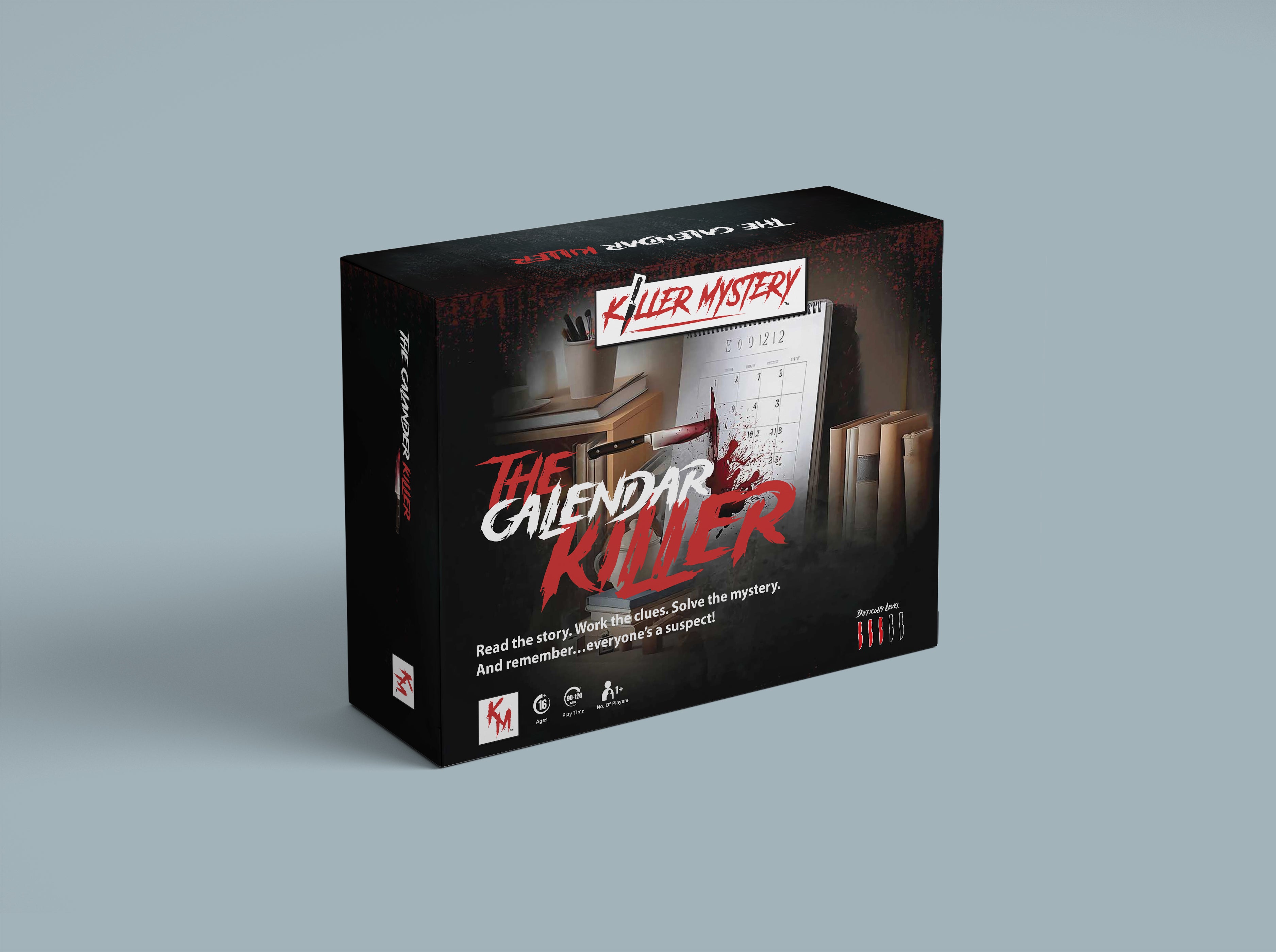
Our Calendar Killer single-story game is built for exactly this crowd. It ships with a welcome booklet, story cards, research cards, physical clues, and puzzles, so the investigation has real texture. There is no subscription required, and it plays solo or with a group.
The Best Mystery Board Games for Families With Teens
The best mystery board games for families keep teens engaged without talking down to them. The sweet spot is a cooperative case where everyone shares clues and nobody gets eliminated early.
Teens tend to disengage when a game feels childish or when one player dominates. Cooperative deduction solves both problems. Everyone reads evidence, everyone argues their theory, and the group wins or loses together.
A few practical notes for family night:
- Check the suggested age before you buy; our games suggest 13 and up, with stories that include adult language and violence.
- Pick a case with a clear goal so teens know what they are working toward.
- Keep sessions short enough to hold attention.
For a deeper look at picking cooperative games that fit teenagers, see our guide on choosing cooperative games for families with teens.
Replayable Mystery Board Games and the One-and-Done Trade-Off
Replayable mystery board games offer repeat value, but most detective games are one-and-done by design. Once you know whodunit, the tension is gone.
That trade-off is not a flaw. It is the point. A one-and-done case delivers a complete, tightly plotted story you solve once and remember. A replayable game delivers variety but usually sacrifices narrative depth.
Here is how to think about it:
- One-and-done cases suit a single memorable game night, a date night, or a gift. You get a full story arc in one box.
- Episodic and subscription games stretch the experience across multiple sessions, so each box brings new clues and suspects.
- Replayable deduction games work for groups who host often and want a game they can return to.
Our subscription delivers a new episode each month across a five-month season, which gives a group something to look forward to rather than a single evening. If you want to know how long a case actually runs before you commit an evening, our duration guide for mystery games breaks it down.
How to Host a Detective Game Night Without Losing the Room
Hosting a detective game night comes down to five jobs: prep the case, set the room, explain the rules fast, manage clues and pacing, and land the reveal. Do those well and the room stays locked in. Most hosts underestimate the first and last jobs, and that is where the night usually slips. A well-timed drink can help the reveal feel like part of the evening rather than a hard stop, and the same attention to atmosphere matters when you host a zero-proof cocktail night.
1. Prep the case before anyone arrives. Read the full rules and the solution at least once.
2. Set the room for focus. One table large enough for every player to reach the evidence, good overhead light for reading, and a clear surface for shared clues.
3. Explain the rules in under five minutes. State the goal, how clues are revealed, how teams submit an accusation, and how long the game runs. Then start.
4. Manage clues and pacing. Give the group a set amount of time per round, and call out when new evidence drops. If a team stalls, offer a hint rather than the answer.
5. Build in a reveal. Have each team name their suspect and explain their reasoning before you read the solution.
Realistic timing. For a single-box tabletop case, plan 10 to 15 minutes of setup, 60 to 90 minutes of play, and 10 minutes of cleanup. For a hosted role-play party, plan 30 to 45 minutes of setup, 2 to 3 hours of play with a break, and 20 to 30 minutes of cleanup. Add 15 minutes at the start for arrivals and drinks. If you are feeding guests, serve food before the game starts or during a scheduled break, not during clue reading.
Handling interruptions and late arrivals. Assign one co-host to greet latecomers, hand them a quick-start sheet, and slot them into a team.
Accessibility and social comfort. Check the reading load before you buy, some cases lean heavily on small-print clue cards. Seat guests with hearing or vision needs near the host and in good light.
Pick Your Case and Start Your First Investigation
Choosing your case is the last step, and it is the one that decides whether the night sings. Match the game to your group's size, age range, and appetite for a challenge, then commit.
We built Killer Mystery for hosts who want a real investigation, not a party favor. Our Calendar Killer single-story game gives you a complete case in one box for $39.99, with physical clues and puzzles built for a table of detectives.
If you are ready to pick a theme that fits your crowd, our guide on choosing mystery game themes for your party helps you match the story to the guests. Then grab The Calendar Killer and see whether your group has what it takes to name the killer.
Your next game night can be a genuine investigation instead of another round of the same old party game. Killer Mystery gives you immersive storytelling, physical evidence to examine, and cases built to keep every guest guessing until the final reveal. Get started with Killer Mystery and turn your living room into a crime scene worth solving.
Frequently Asked Questions
What makes a detective game work well for a party?
The format has to match the room. A party game works when the rules teach in under 10 minutes, the player count fits your guest list, and everyone has something to do during each round. Deduction games with shared evidence, group discussion, and a clear suspect list keep quiet guests involved. Games that require one person to run the whole thing, or that lock players into solo reading, tend to stall a party.
How many people can play a detective board game?
It depends on the format. Boxed deduction games usually cap at 6 to 8 players. Murder mystery kits and at-home case games often scale wider, and Killer Mystery's subscription box suggests up to 8 people, playing solo, as a couple, or with a group.
How long does a detective board game take?
Plan for 30 minutes to 2 hours per case. Killer Mystery's episodes run roughly 30 minutes to 2 hours each, which fits a single party block without dragging. If you are hosting a full evening, run one case, take a break for food, then start a second case rather than stretching one mystery past its natural ending.
Can you replay a mystery board game?
Most story-driven mystery games are one-and-done: once your group knows the killer, the tension is gone. If replay value matters, buy a replayable deduction game for regular game nights and save the one-and-done case files for a fresh group of guests.

Comments